TB II Excerpts
Here’s a bit o’ Trac Brothers II for you!
Here’s a bit o’ Trac Brothers II for you!
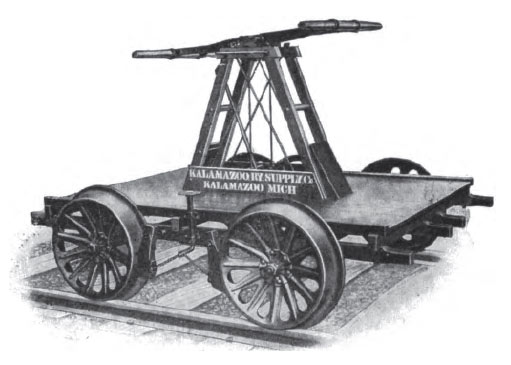
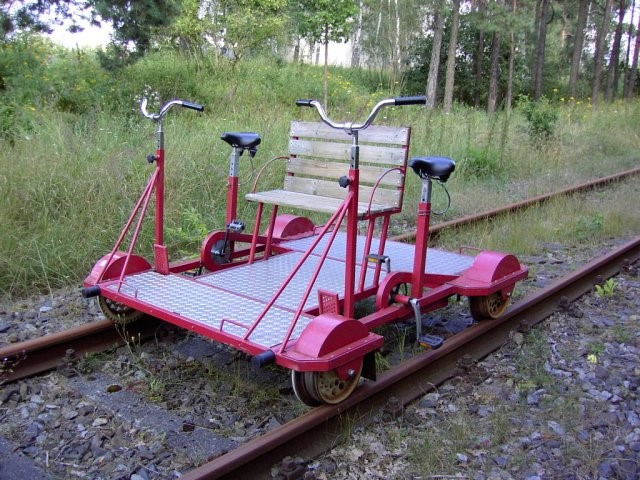
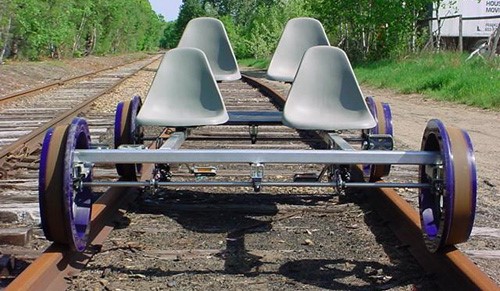
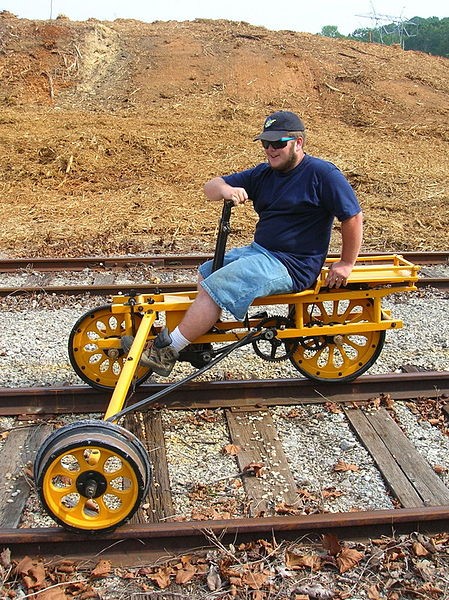
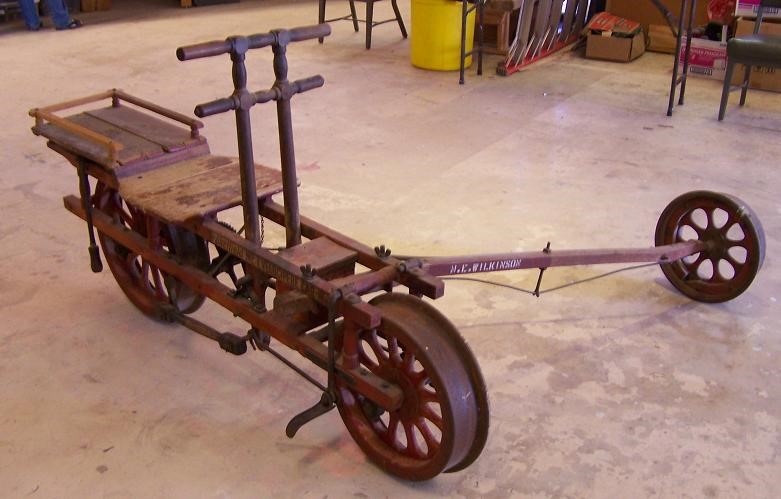
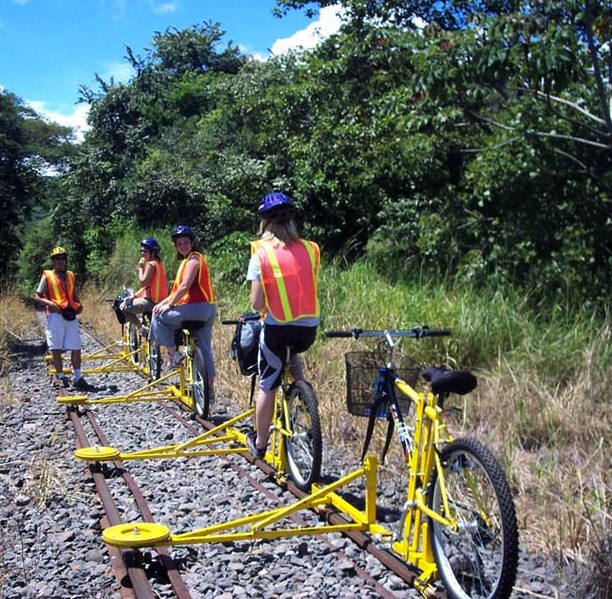
Wondering what a handcar looks like? What the heck is a Velocipede? Or an Autorack? A Draisine / Jigger??? This will help. (I don’t own the rights to this photos – found using Wikipedia)
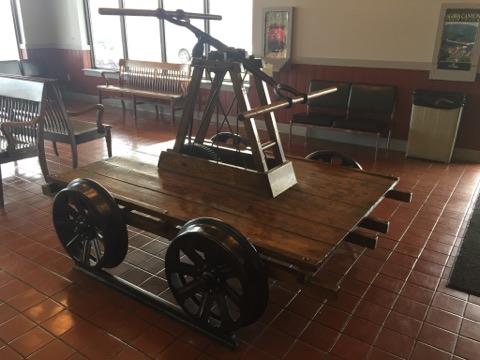
Here are a few hand car samples I found in my travels:
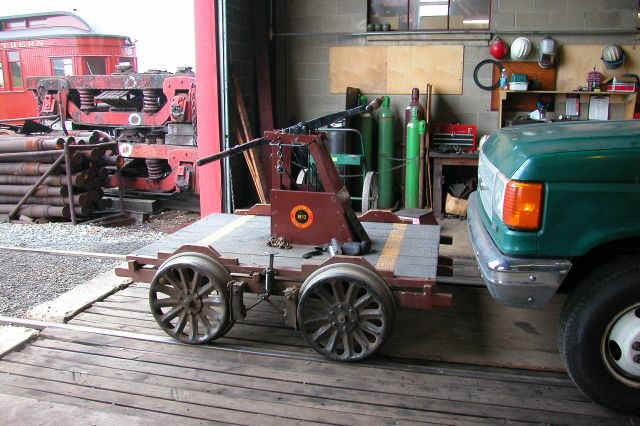
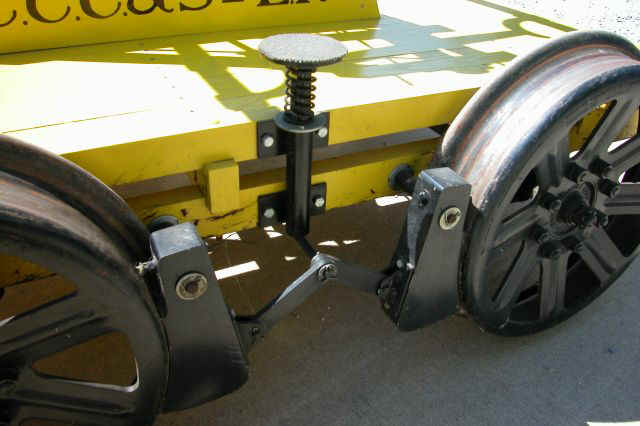
This is a closeup of the brake assembly
If you’ve read Trac Brothers and can’t picture what an autorack looks like? Here ya go!
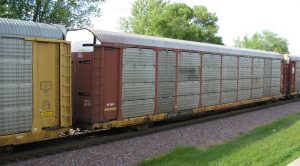
From the outside
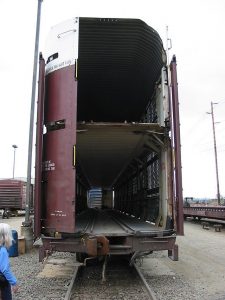
From the inside – they hold 8 cars in total – 4 on top and 4 on bottom
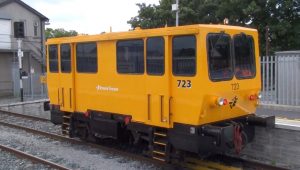
Here is a Draisine (or Jigger). They are used for inspecting the track, as well as moving the occasional boxcar around
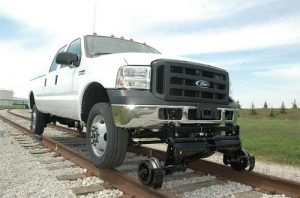
Here is what a pickup truck looks like that’s been modified to drive on the rail
A Ticket to Hell – The Long, Lost Town of Walton Junction
Researched and Written by Randy D Pearson © 2019
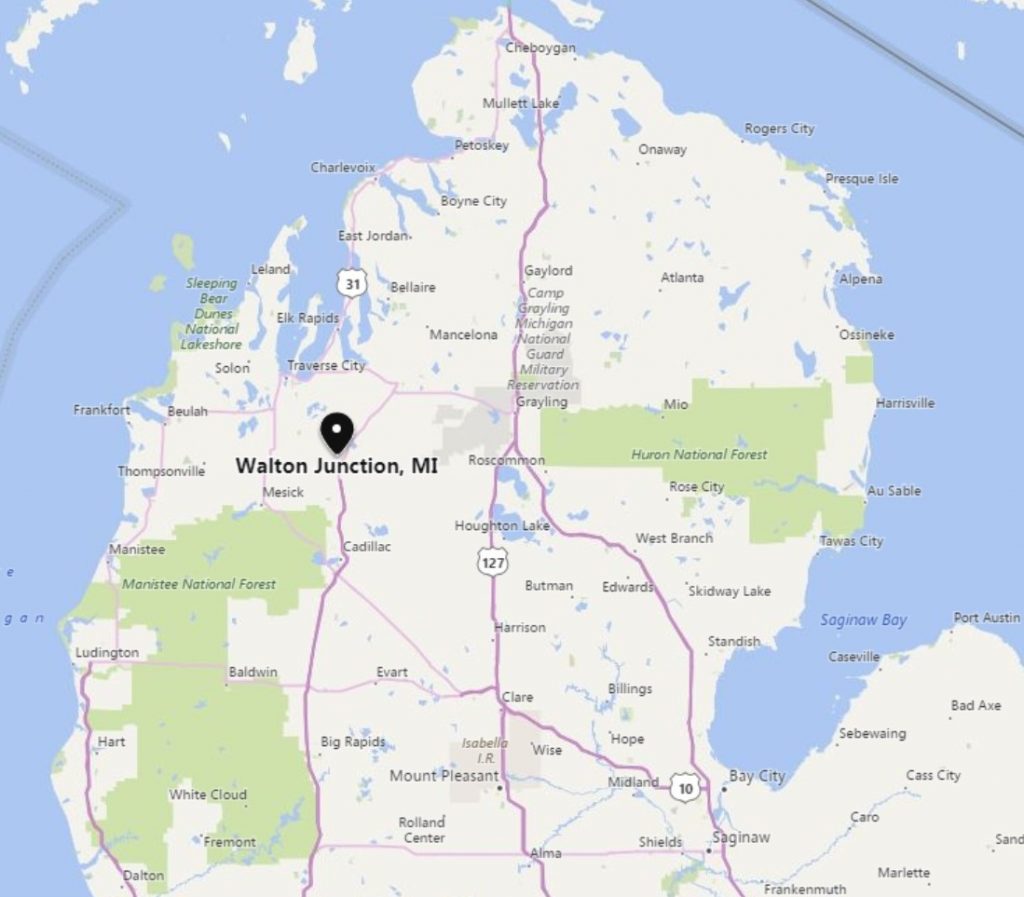
From 1873 through the early 1920s, if you walked into any train station on the Grand Rapids & Indiana Railroad line and asked for a “ticket to Hell,” the agent would look at you straight-faced and hand you a one-way ticket to Walton Junction. Here is the short, fascinating history of that long, lost town.
Location, Location…
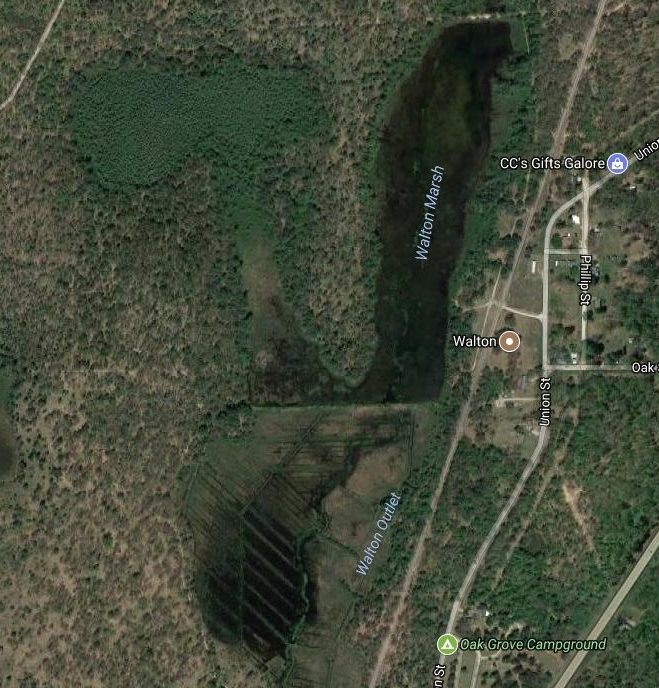
When I started writing my latest novel, Trac Brothers (the modern-day story of two brothers who inherit a nineteenth century handcar, put it on the train tracks, and have the adventure of a lifetime), I researched locations. I wanted this fictional action-adventure tale to take place in a real Michigan town. I started with Manton, a small city north of Cadillac on the west side of Michigan’s Lower Peninsula, because I have some dear friends who live there. From there I needed a place for the Rail Riders, the ‘friendly but weird’ group living off the grid, to reside. While scanning maps of the area, I found this intriguing location:
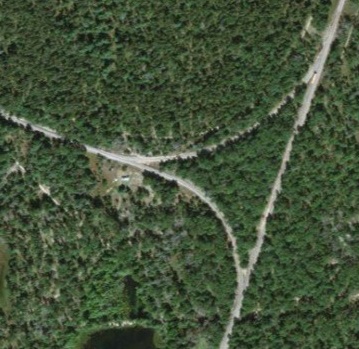
This 1-2 mile area, where three sets of train tracks meet in a rounding triangle, was the perfect place for my characters to live. While most maps either have this location unnamed or call it Fife Lake, the name Walton kept popping up. Walton Marsh, Walton Outlet, and then I found the original name for this area: Walton Junction.
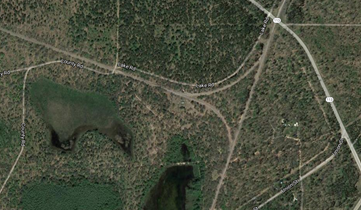
An Internet search for Walton Junction brought up almost no information, so I went to Fife Lake, the nearest town a few miles to the north. The curator of the Fife Lake Historical Society, Craig Bridson, not only shed some light on this former town, but he even took me out to the location to see for myself what is left of Walton Junction. The short answer – very little.
Walton Junction, the beginning
The area north of Manton and south of Fife Lake had two things going for it – the lumber industry and the railroad industry.
Most people agree that Walton Junction started in 1872, when the Stronach Lumber Company, a major timber harvester, opened a store and a boarding house. However, this village sprang to life in 1873 when a railroad depot was built at the junction of the Grand Rapids & Indiana (GR&I) and the Traverse City railroads. These tracks went off west toward Traverse City, south to Clam Lake (now called Cadillac), and north toward Fife Lake and Petoskey. There were originally a fourth set of tracks to the south of the triangle as well. Manistee & Northeastern (M&NE) ran under the other tracks just north of town, heading from Kaleva, north of Ludington, to Grayling. Those tracks have since been removed. The area where the tracks used to reside is still visible in the above satellite picture. (The picture below is showing the now-removed tracks travelling under the still-existing tracks.)
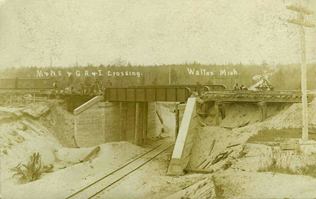
With this being the starting point of their branch line to Traverse City, GR&I selected this area as the location for their construction headquarters.
Walton Junction’s Founding Three
This new village prospered due in part to three enterprising men – AF Phillips, HA Ferris, and Robert Knaggs.
A foreman on the GR&I construction crew, Abram F Phillips built the first house in early 1873. From there he began to keep boarders. Within a few years, he started one of Walton Junction’s hotels.
Henry A Ferris, a land looker, opened a road from Traverse City to the Manistee River by way of Walton.
With both the promising location as a railroad junction and a road to the river, Walton Junction was officially founded in 1873.
Robert Knaggs, while moving to Traverse City in 1867, was robbed on his way out of Detroit. Left with only 18 cents, he found a job as a carpenter at Hannah, Lay & Co. He worked there for eight years before he moved to Walton Junction and opened the first hotel, the Walton Inn, in 1875.
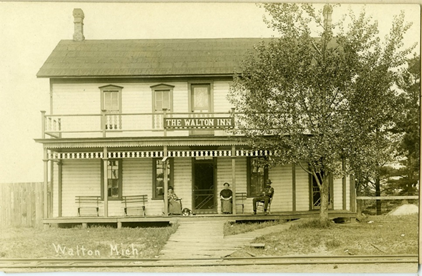
By 1877, two smaller hotels popped up (the GR&I House, owned by Phillips, and the Commercial Hotel), as did The Stronach Lumber company and store, and a train ticket booth. By now, the population had grown to around 100.
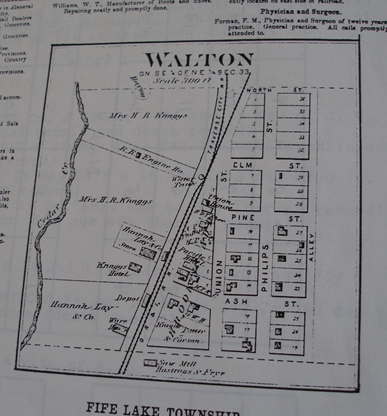
With travelers changing trains and experiencing layovers, the hotels prospered. 1880 saw the first saloon, built by Ferris. This watering hole had many different types of customers. The railroad workers and the travelers stopped in for drinks, as did the many lumberjacks and the rivermen in the area. These rivermen, sometimes called riverhogs or just hogs, moved the lumber down the Manistee River. The location of Walton, between the Manistee and Boardman Rivers, made it handy for hundreds of men to get together, for some drink and a friendly fight on weekends.
Saloons, Hotels, and Bawdy Houses
By 1885, in addition to the three hotels, (Knaggs’s Walton Inn, which had become the Exchange, the GR&I, and the Commercial), there were now as many as ten saloons. The village also had two general stores, a blacksmith, a druggist, a carpenter, a station agent, and two doctors (who were undoubtedly kept busy due to all the brawls – but more on that later). Also, if the rumors are to be believed, there were upwards of four bordellos, referred to as “Bawdy Houses.”
One entrepreneur, Dennis Thralls, ran a furniture store, was the undertaker, the justice of the peace, and the postmaster.
The regular population was now up to 200, but because this was the only place between Traverse City and Cadillac where a tired and thirsty laborer or traveler could get a drink and feminine companionship, Walton Junction could swell to upwards of 2,000 on the weekends. On Fridays, around suppertime, trains from the north and south would let the young men loose on the town. The respectable women ushered their children and husbands into the security of their homes, staying inside behind locked doors until Sunday evening.
Them’s Fightin’ Words!
After an evening of hard drinking, the fighting would soon commence. Stories of the brawls between the lumberjacks (often called Jacks) and the hogs were legendary, as was the brutal rivalry between the Jacks and the railroad men. The railroad crews from Clam Lake would head to Walton Junction, looking to mix it up with the Jacks coming over from Traverse City. Sometimes, even the best of friends just wanted to let off some steam.
Given that the visitors were primarily young and single men, as the evening wore on, drunken brawls were common. In fact, they seem to be the major source of entertainment. These fights did not involve weapons such as guns or knives. The men would simply stand toe to toe and slug it out. If a man was knocked down, he was given room to get back on his feet.
Lumberjack Smallpox
The most dangerous fights involved the Jacks. When one of the contestants could no longer stand, it was considered acceptable for the victorious lumberjack to “brand” the loser by stomping on his body with the his steel caulked boots. They called this pocked-marked pattern, “lumberjack smallpox.” The bleary-eyed losers would often limp back into their camps on Sunday night having lost a tooth or two (and in one case, a man showed up with his ear in a paper sack, looking for a doctor to sew it back on) but having gained a man-made case of smallpox.
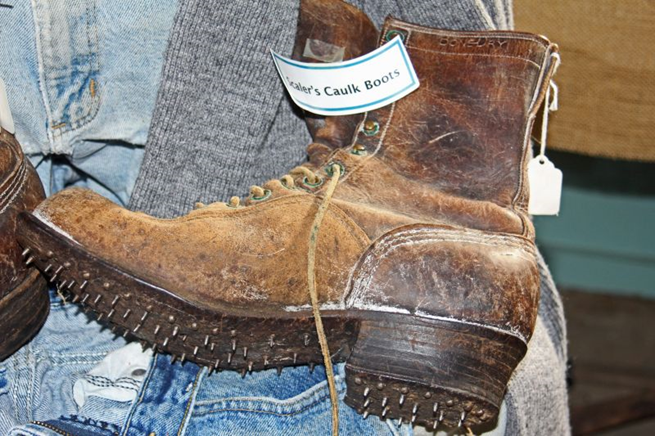
Walton became notorious for hundreds of miles, hence the “ticket to Hell” moniker. Without much in the way of law enforcement (they had no sheriff or constable, and though they were between Grand Traverse and Wexford Counties, they did not receive help from either), it was mostly left up to the bouncers and bartenders to keep the peace.
Cranberry Time
Around 1890, DeWitt Clinton Leach, the Grand Traverse Herald publisher, established a cranberry farm, Walton Junction’s only actual industry.
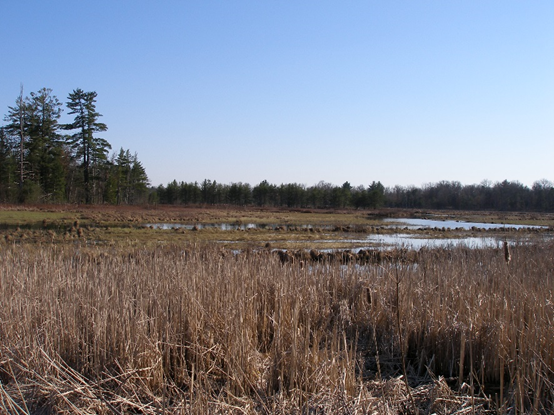
A few blocks south of town sat a creek. Leach had a 200-foot earthen dam built through the creek, producing a marsh to the north. This created the perfect area to the south of the dam to grow the cranberries. He added sluice gates to control the water levels, and had trenches dug, planting the cranberry bushes on the ridges in the bog.
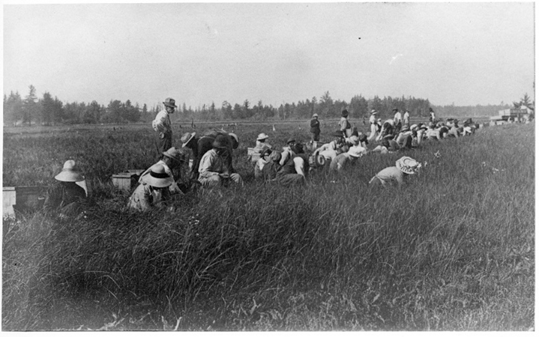
The first several years were immensely successful, with annual yields of around 1,000 bushels, harvested mostly by Native American pickers. However, Mother Nature had other plans. On July 10, 1898, the region experienced a hard freeze, destroying the entire cranberry crop that year.
He had even worse problems with the muskrats, who tunneled through the dam and dug in the ridges, toppling the bushes. Nothing Leach tried worked, and by around 1910, he sold the failing business to GA Babcock, who then closed it entirely around the early 1920s.
The earthen dam still exists today, separating the Marsh from the Outlet. The occasional cranberry bush can be seen scattered throughout the bog.
The Peak and Decline
Walton Junction’s regular population (not counting those wild weekends) peaked in 1903 at around 250 people. By then, the timber was gone, so the lumberjacks moved on. The automobile business was starting to pick up, so people weren’t using trains for daily travel as much anymore. This caused some of the businesses to relocate. At this point, only the Exchange Hotel remained, as did a couple of restaurants, a general store, carpenter, and one of the saloons.
By 1917, the population was back down to 100. Then the train station closed around the time that the newly built highway bypassed the town, signing Walton Junction’s death warrant.
With businesses closing, the people began to move away as well. With no one to sell to, the property owners would just abandon their houses. The ownership reverted to the county. A few studious entrepreneurs waited until auction time, buying up the properties for cheap. They weren’t doing it for a possible Walton Junction revival, though. Instead, they would gut the houses for everything valuable, including the lumber, selling it all off. Then they would stop paying the taxes, and again let the land revert to the government. That is the main reason why Walton Junction can’t be called a ghost town. There is simply nothing left. Even most of the foundations have been hidden by the years.
The only sign that Walton Junction ever existed is, quite literally, a sign.
Reclaimed by Nature
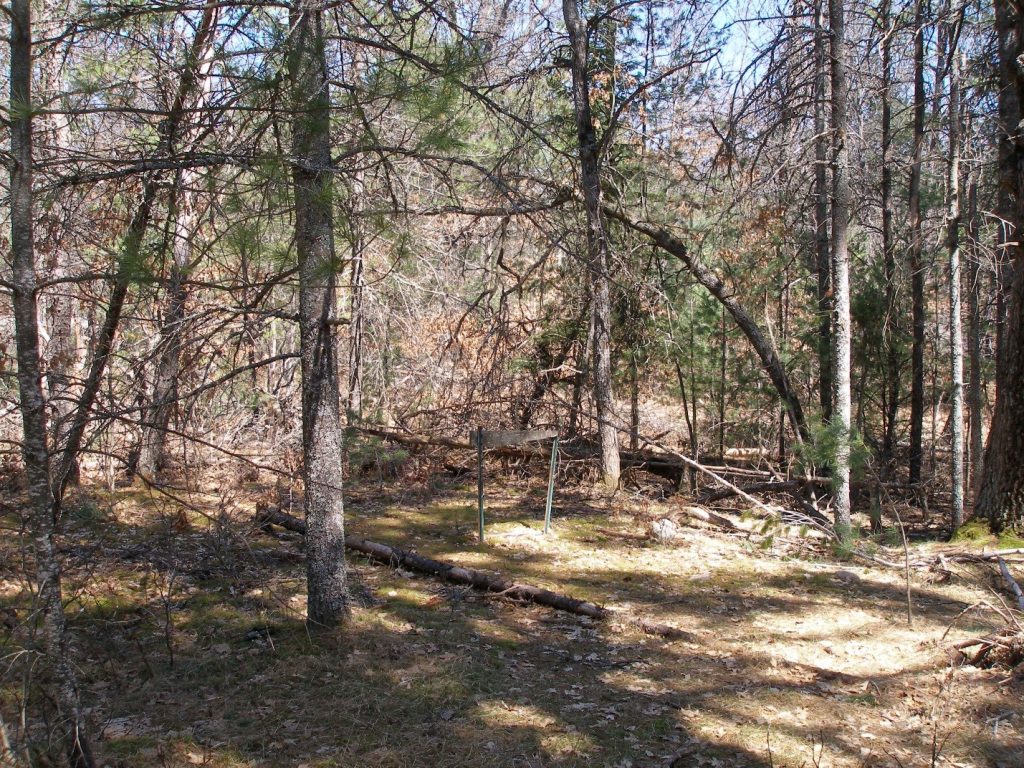
The Walton Junction Cemetery, like the rest of the town, has been reclaimed by nature. There are no tombstones or obvious areas where the people were laid to rest. It looks more like a forest than a cemetery.
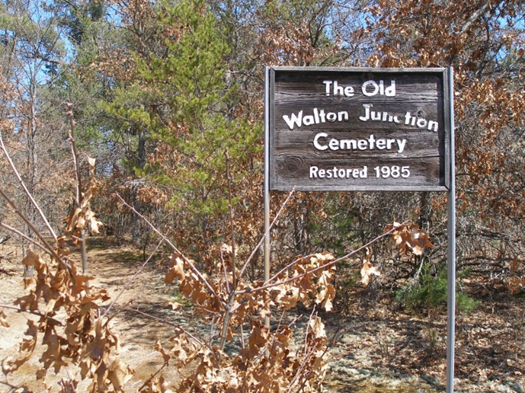
In fact, most of the bodies had long ago been relocated about a mile away to the new Walton Cemetery, on Medrak Lane in Fife Lake. However, rumor has it that as many as thirteen bodies or parts of bodies remain here (workers, landowners, Native Americans, or transients), spread out among the trees. This is still a sacred place, but with people who are lost to time.
Below is a picture of the cemetery. Note the piece of wood fragment affixed to two metal poles. This much older cemetery sign still bears some faded words, but time has mostly erased them.
Walton Junction had a rapid rise and an equally fast decline, but was a hell of a good time when it was around.
Bibliography
The Traverse Region, Historical and Descriptive, with Illustrations of Scenery and Portraits and Biographical Sketches of Some of Its Prominent Men and Pioneers – HR Page and Co – 1884 Chicago
Walton Junction, a Town with a Colorful History – Record-Eagle – Traverse City, MI
Vinegar Pie and Other Tales of the Grand Traverse Region – Al Barnes – Wayne State University Press, 1959, 1971, 1984, Literary Licensing, LLC, Jul 1, 2012
History of the Grand Traverse Region – Morgan Lewis Leach – Central Michigan University by the University Press – 1883
Early Walton was a Hell of a Place – Larry Wakefield – Summer Magazine – Traverse City Record-Eagle – May 24, 1991
Historical photos and documentation courtesy of the Fife Lake Historical Society – Craig Bridson, Curator
Modern photos © 2018 Randy D Pearson
Want a couple of Trac Brothers excerpts to whet your whistle, as the old saying goes?
Excerpt #1 – Chapter 2 – pages 20-24 (The brothers’ first attempt with the hand car)
Excerpt #2 – Chapter 6 – pages 52-57 (Their introduction to Walton Junction – and its inhabitants)
Excerpt #3 – Chapter 14 – pages 112-116 (Santascoy comes to the Riders’ camp in full force)
Chapter 14 (pages 112 – 116) – Santascoy invades the Riders’ camp – on a mission!
Jackson Trachsel awoke to the sound of shouting and screaming. Pulling the tent’s zipper down, he yanked it open and emerged to discover chaos all around him.
Taking several steps toward the melee, he saw Track Pirates everywhere. Fists, along with anything not nailed down, flew through the air. Wick and the other Rail Riders were presently holding their own, but the Pirates outnumbered them.
When Jackson saw Zagar, the bald-headed Pirate, straddling Preston while raining fists down unmercifully, the young man did not hesitate. He ran headlong at Zagar, slamming into the Pirate’s side, knocking him off Preston. The two men rolled around on the ground exchanging blows before Jackson jumped to his feet. Leaning forward, he swung his left fist down at the Pirate’s face, but Zagar blocked the blow with his arm, then returned the favor with a kick to Jackson’s gut.
This sent him staggering back, giving Zagar enough time to leap to his feet. He lunged at Jackson, knocking them both back to the earth. A couple well-placed punches to Jackson’s face and body took some of the fight out of the young man.
“Enough!” yelled Santascoy, who accentuated his voice with a loud gunshot. The pistol he bran- dished looked more like a prop from a pirate movie than it did an actual gun, though it sounded plenty real. The huge divot blasted into a nearby maple tree looked menacing. “Rail Riders, my good friends, kindly move yourselves toward the tree I just shot. We have some quick business, and then we will be on our way.” Looking around at the scared and bleeding crowd, he turned and pointed the pistol at Jackson. “You there, Mac’s young nephew. Come here, dear boy.”
When Jackson refused to budge, two of the Pirates walked over to him, each grabbing an arm, and dragged him over. Tossing him at the Pirate King’s feet, Santascoy laughed as he addressed the Pirates. “Thank you, Smitty. And thank you, Edison. Now boy, look at me.”
Jackson glared upward, holding his left cheek. “What?”
“Now where is your brother, hmmm?” He scanned the crowd, but when he did not locate Jam, he continued, “I wouldn’t have pegged him for the cowardly type, but no matter. Let’s begin. First, what is your name? I’m tired of calling you ‘boy’.”
When he did not answer, Santascoy motioned for the men flanking Jackson to lift him to his feet and pull him even closer. Speaking slowly, and enunciating each word carefully, Santascoy said, “What is your name?” Jackson still did not respond, so he gestured at another Pirate, a harsh looking man named MacCart with a menacing scar just under his right eye. He walked up to Jackson, grinned maliciously, and landed a fierce blow to his solar plexus. “Feeling a bit more talkative now, perhaps?”
Again, Jackson remained silent, so the Pirate King cocked his pistol and aimed it into the crowd of Riders. “I’m not going to keep playing this game with you, boy. You answer my questions or I’ll shoot … oh, I don’t know … how about the woman over there with the apron? Yes, I think she’ll do wonderfully.”
“Okay, okay, fine,” said Jackson with a grimace. “My name is Jackson.”
Lowering the pistol, Santascoy displayed a self-satisfied grin. “See, was that so difficult? Now Jackson, I only need one thing from you, and then I’ll leave. I’ll take my men, and we’ll roll away from here post-haste. So tell me, Jackson, where is your uncle’s handcar?”
Jackson’s face crinkled with confusion. “Why do you want our handcar? You have plenty of your own, and they’re all rocket-powered or whatever.”
Releasing a slow, ominous-sounding laugh, Santascoy again motioned toward MacCart. The Pirate marched over and landed another devastating blow, this time in the stomach. Jackson slumped as Santascoy said, “Jackson, this isn’t a discussion. There’s no give and take, no witty repartee between us. I ask the questions, and you answer them. I get what I want, and you get to lick your mounting wounds. So, unless you wish to have even more wounds to lick, I suggest you answer me. Where is Mac’s handcar?”
At that moment, Jackson wished he could muster up some saliva. He had seen it in enough movies where the captive good guy could not mount an offense. In that instance, the hero would bring up a gob of phlegm and spit the gooey mess directly into the villain’s smug face. Unfortunately for Jackson, after all that exertion, he had a rather dry mouth. All he could muster was a drop of drool, which rolled off his lip and hung embarrassingly on his chin.
“Boss,” yelled Zagar from the other side of the compound, “I think I found it over here!”
“Bully,” said Santascoy, flashing another super-ior grin. “Looks like you won’t need to answer my question. Good for you, remaining vigilant in the face of adversity. Your dear uncle would’ve been so proud, had he lived. By the way, you’ve got a bit of something hanging there,” he said casually, gesturing toward the drool precariously balancing on Jackson’s chin.
As Santascoy turned to walk toward Zagar, the other Pirates tossed Jackson to the ground. He landed hard, though despite the pain, he quickly pulled himself to his feet.
“You can’t take our handcar. He willed it to us, you chud-head!”
Pausing, Santascoy slowly turned back to look Jackson directly in the eyes. “I can do whatever I want, Jackson. Mac couldn’t stop me, and he was easily twice the man you are.”
Taking a step toward Santascoy, Jackson again felt hands tighten around his arms. This time, however, they were not Pirates. Instead, Riders held him back. Wick whispered in his ear, “Not now, Jackson. Let the smug bastard go.”
Rebelliously yanking his arms away, Jackson mumbled, “You’ll get yours.”
In response to his words, Santascoy yelled back, “Oh, I’ve got mine … well, technically, I have yours, which will lead me to mine.”
Two of the Pirates picked up the handcar and sat it on the tracks behind one of the motorized cars, then attached a rope between the two vehicles. As fast as they had arrived at camp, the Pirate posse rolled away, the handcar in tow.
Once gone, the Rail Riders gathered around the fire to assess their damage. While no one had sustained serious injuries, nearly all the members had some sort of abrasion or contusion. Jackson’s stomach and chest ached. “That was insane!” he shouted. “Why did they want Uncle’s handcar? It makes no sense.”
Shaking his head slowly, Wick replied, “No idea. Perhaps it’s just a souvenir of his rivalry with Mac. It’s hard saying.”
Defiantly, Jackson said, “I don’t care why he wanted it. My brother and I will take it back. It’s our property, our legacy.”
Wick shook his head again, but a bit slower. “I understand your feelings over this, but I just don’t think it’s a good idea. Those Pirates are crazy, especially Santascoy. It’s just not worth it.”
“Oh, it’s worth it!” said Jam as he and the others emerged from the forest. “But not for the reason you think.”
Chapter Six – pages 52-57 (The brothers’ introduction to Walton Junction – and the inhabitants!)
So this,” said Jackson with more than a little disgust in his voice, “is where Uncle Mac wanted us to go? This deserted, empty … I don’t even think I can call it a town.”
Jam allowed a small grin to spread across his face as they continued rolling slowly through the area. With his love for exploring and hiking, wandering through a long-forgotten village filled him with excitement. The idea of finding cool stuff like old beer cans or lost treasure intrigued him. He just wished he had his metal detector with him. “Well, I don’t know, I think this could be cool. Let’s find a place to park.”
They pumped the handcar up another block, found some level ground near a former road, and hit the brakes. Once stopped, they lifted the handcar from the tracks, set it down, and then rolled it off the road and into the tall grass.
Though the pushing became tougher, they con-
tinued to move it until they were able to shove it inside a thicket of tall weeds and bushy trees. A bit of maneuvering later, and they stood back. “There! Now no one can see it,” said Jam with more than a little pride evident in his voice.
Jackson scratched his head as he gazed around at the emptiness. “Who exactly are you concerned about? There’s no one here! Are you worried about ghosts?”
Shrugging, Jam replied, “Or pirates. Who knows?” He looked at his brother and winked. “Better to be safe, yadda yadda.”
Removing the map from his jeans pocket, Jam unfolded it and held it out flat. “There,” he said, pointing at the spot on the map where the three sets of train tracks crossed, forming a slightly rounded triangle around a couple of miles in diameter. “The X is directly in the middle of this triangle. I’m guessing it’s over there,” he said, pointing up to where the two tracks split off.
The brothers walked around the area, trying to find any sign of the former town of Walton Junction. Jackson saw a couple of rusty cans and walked over to investigate. “Looks like they used to drink Carling’s Black Label and Goebel’s ‘round these here parts,” he said with a slight twang to his voice.
Digging in the debris, Jam unearthed a flat bottle. “Check it out! An old whiskey bottle! So sweet!”
“Hey!” shouted a loud voice in front of them. “What the hell are you doing? This is private property!” The boys looked up to see a large, unkempt man, arms crossed over his thick, muscular chest. His short, thinning grey-black hair ruffled in the wind as he scowled at them.
“Oh, sorry, sir,” responded Jam. “We didn’t know.”
“So ya thought you could just stomp into our little village, steal whatever you want, and take it back to the big city?”
A loud snort of a laugh escaped Jackson’s mouth. “You’re kidding, right? Are you afraid we’ll pillage your rubble piles? Abscond with your rocks? Steal …” he paused to think up another ridiculous item before looking at his brother’s hand. “An old bottle?”
Walking closer, the man continued, the bass in his voice ever deepening, “These heirlooms are not yours to take. This isn’t a junk pile. It used to be someone’s business or home. Respect it.”
Jam knew Jackson was about to continue his rant of disrespect, so he quickly set the bottle down, put his hands out, and said softly while backpedaling, “I’m sorry. We’re both sorry. No disrespect meant. We assumed this place was deserted.”
“Well, it’s not. Many people live here.”
With a wide sweep of his arms, Jackson replied, “Where, may I ask, are they living, exactly? In the weeds or in the rubble?”
The man unfolded his arms and pointed his meaty right hand at Jackson. “It doesn’t matter where. You need to leave.”
Putting his hand on his brother’s shoulder, Jam said, “Of course. We’re going. Sorry!” Then, smacking his brother on the back, he whispered, “This guy’s off his nut! Let’s get outta here.”
As they trotted back toward the handcar, they saw a few other faces peering out at them from the trees and around the few remaining buildings. While hurrying away, the brothers were not able to get a good look at the people, but Jam did notice their grime and overall unkemptness. Looking back, he said, “Nice meeting you. We’ll be going now.”
When they reached the handcar, they quickly pulled the weeds away and started pushing it toward the tracks. This caused the crowd to start murmuring amongst themselves. The closer to the rail they moved, the louder the people became.
As the brothers lifted the handcar up and inched it to the tracks, the man yelled, “Hey, wait a minute you two!”
When he started running toward them, Jackson screamed, “What the chud?! Hurry!”
Not wanting to wait around to see what the hairy, scary man wanted, Jam grunted, “Almost there,” as they dropped the car onto the tracks. They both leaped up onto the platform and began pumping as the man caught up to them.
Taking a long look at the handcar, the man muttered, “That’s what I thought,” before shouting, “Hey! Where the hell did you two get this handcar? Did you steal that too?”
In what seemed like a split second to the brothers, several men came running out from the shadows. Two of them jumped up onto the handcar, knocking the Trachsel boys from the platform. Before they could mount any offense, Jam and Jax were face down on the ground with their hands pulled behind them. Turning his head and spitting out a mouthful of dirt, Jam yelled, “Hey! Get off us!”
The men, strong and wiry with thick beards and wild eyes, pulled the brothers to their feet, dragging them toward the forest. Jackson whispered to his brother, “Where was Deliverance filmed, exactly?”
“Shut up!” yelled the man who had a grip on Jackson.
“Hey, I’m not dissing your lifestyle there, Grizzly Adams,” Jackson said to the man who possessed an even thicker beard than did the mountain man from the ‘70s TV show. “Just know I don’t swing that way.”
In a surprisingly quick motion, the man spun Jackson around, so the two were face to face. Pushing his face uncomfortably close to Jackson’s, the man said, “Not one more word from you. You feel me?”
Though Jackson had another snarky comment at the ready, he decided not to antagonize him any further. Instead, he nodded rapidly.
They continued to drag the brothers away from their handcar and further into the woods. Once the trees became too thick to see the train tracks, the men stopped, slamming Jam and Jax up against thick oak trees. Within moments, the bearded men had them tied to the trees with sturdy rope. Jackson could not help himself. “So, what, you people walk around the woods carrying rope, just in case you run across city folk with purdy mouths?”
“Dude,” whispered Jam, “shut it already!” Turning his head to stare back at the man who had first accosted them, Jam tried his best to calm his racing nerves before speaking again. “Look, I don’t know who you are –”
“Where did you get that handcar?” the man demanded.
“What?” Jackson yelled with as much defiance as he could muster. “That’s none of your business.”
Putting his hand on Jackson’s shoulder and squeezing, the man said slowly, enunciating each word. “Where did you get that handcar? And don’t lie to me or I will break your shoulder.”
“Ow! Dude! Our Uncle Mac! He willed it to us!”
Instantly, the man loosened his grip. “Mac? He willed it to you? Oh my God, Mac is dead, isn’t he? I didn’t want to believe that. How long ago?”
Jackson yelled, “Untie us, bufflehead, and we’ll tell you all about it!”
Shooting a quick glance at his brother before turning back to the man, Jam replied, “It’s been a week or so. They had the will reading last Saturday, the funeral a couple of days before that. How long had you known Mac?”
The big man gestured toward the others, and they started to untie the brothers. “Forever it seems. He was one of us.”
Rubbing his wrists, Jackson said, “One of what?”
In unison, several of them shouted, “The Rail Riders!”
“Oh chud,” Jackson muttered under his breath. “They’re not gonna sing now, are they?”
This section begins at the start of chapter two – page 20. This is where the brothers first try out the handcar on the train tracks. (It’s not as easy as it looks!)
Benjamin and Jackson Trachsel stood on the platform of the old handcar, each on their own side. They faced one another with their hands resting upon the smooth, wooden handles. Since the handle on Jam’s side was in the up position, about mid-chest height, he started the process by pushing downward. This sent the handle down to around his knees. The handcar rolled a few inches, in the opposite direction to where they had anticipated. “Oh,” said Jackson. “Do you see a reverse direction lever or anything?”
Looking around, Jam replied, “Nope. All I see is the brake and that locked box. I guess we have it facing the wrong direction. Or, maybe it’s fate telling us to investigate the map? Huh?” Jam wiggled his eyebrows and smiled his toothiest smile.
Jumping off, Jackson said, “Um, no. Nice try, though.” They picked up the vehicle and slowly rotated it to face the other direction. Between the heaviness of
the device, and the awkwardness of moving it over the top of the rails, it took them several minutes. “Okay,” Jackson said, breathing heavily, “let’s try this again.”
This time, the pumping propelled them in a southerly direction, with Jackson facing forward while Jam’s back was toward the direction they traveled. The ease at which the mechanisms moved astounded the brothers. “Wow!” Jackson exclaimed. “Obviously Uncle kept this beast well maintained and oiled. I wonder why?”
“Isn’t it obvious? He had a map, for chud sake! He must’ve rolled along these tracks many times.” Jam decided to give Jackson another verbal push, as his curiosity of what lie north continued to prod him. “We really should check out what the map’s about.”
Jackson ignored him, focusing his concen- tration on the up and down motion of the handle. “My chud, is this hard work!” Sweat began to bead on his forehead. The pumping motion, starting chest-high, felt natural enough. However, at the end of the cycle, the brothers had to bend their back and knees slightly to reach the bottom of the arc. Though the pumping mechanism was in top-notch condition and the gears glided smoothly, the repetitive motion put a lot of pressure on their bodies.
After fifteen minutes of brisk pumping, the brothers had the handcar swiftly traveling. “I have to say I’m impressed,” said Jackson. “I’d say we’re moving at 25, maybe 30 miles per hour. Not blistering, sure, but I thought these devices could only go a few miles per hour. I’ll bet we could get 40 outta this beast if we put our backs into it.”
“Let’s give it a try,” Jam said, sporting a widening grin. “At this speed, we won’t be home before dark.”
“I’m game,” he responded as he pushed down on the handle even harder.
The brothers pumped with all of their might for several minutes, rolling miles away from the farm-
house. Jam said breathlessly, “Whew, this is quite … the workout, huh?”
“I … I think … we could …” Jackson stam- mered, trying to get the words out while breathing heavily, “perhaps … take a … break. Gads!”
“Oh? Getting winded … are you? Haven’t been … working out … like you … usually do … huh, Jax?”
“I … haven’t … had … much … time … with … school … and …” Letting go of the handle on the upswing, he added breathlessly, “Holy … chud … I’m … wiped!”
Without Jackson’s hands on the handle, it shot rapidly down and back up. The quick motion threw Jam off balance. The downswing nearly tossed him off the car, while the next upswing narrowly avoiding clipping Jackson on the jaw. Regaining his balance, but still fighting the overly fast up and down motion of the handle, Jam jammed his foot onto the brake. This decelerated the car rapidly enough that Jackson tumbled forward, the handle slamming into his chest. He then fell backward off the handcar and onto the tracks with a solid, painful thud. Jam lost his fight with the fast handle movement as well. Letting go, he also tumbled off the car, onto the tall grass on the side of the tracks.
Both brothers lay sprawled on the ground, breathing heavily for a couple of minutes. Jam looked over at the handcar, which had traveled a few dozen feet up the track after they fell off. Finally, Jam sat up and said, “Okay, so what did we learn there?”
“Ow! Don’t let go of the handle. That seems like a big rule #1.”
“Right. And hitting the brake so hard like that, also a big no-no.”
“True story. Hold on tight and slow down slowly.”
Jackson rolled over and gingerly sat up. “Mother of chud, do I hurt.”
Sitting up as well, Jam looked over at his brother. “Did the handle cause much damage?”
Touching the spot on his chest where the handle impacted him, he replied, “No, not really. It’ll bruise, but that’s probably it. It’s my arms and back that are killing me right now! That’s a lot of work pumping that thing over and over.”
Jam brought his arms up over his head and stretched. “Ow! Yeah, I agree.” After another minute of sitting, Jackson said what he figured his brother was also thinking. “There’s no way we can pump this handcar all the way home right now. It’s just too much work for us.”
Nodding his head slowly, Jam replied, “Yeah, I suppose. I mean, it’s not all that hard, really. Our muscles just aren’t used to it is all. I know we would be able to do it given time. You’re just in awful shape.”
Fire flared in Jackson’s eyes. “I’m not in awful shape! I’ve just had to cut back on my workouts lately. I didn’t play baseball this year, but I still have the muscle mass. I just don’t have all day to lift weights, ride a bike, and kayak around like you do.”
Smiling, Jam replied, “I don’t do it all day. I do sleep from time to time.” After a momentary pause to squeeze one of his sore biceps, he added, “But regardless, this is not something either of us can pick up and continue to do right now.”
Jackson nodded his agreement. Staring ahead at the handcar off in the distance, he said, “So what do we do? It’s getting dark.”
The elder Trachsel tossed a thumb back toward the farmhouse. “I don’t see an alternative, really. We push the car back to Uncle’s house and spend the night there.”
Wincing at the thought, Jackson said, “I highly doubt I can do any more pumping. I can’t even lift my arms.” Illustrating his point, the younger brother raised his arms up, but could only get them to chest height before they started trembling.
“Well … we can’t leave it on the tracks. Let’s just try pushing it.”
The brothers trudged over to the handcar. They both placed their hands on the same side of the wooden frame, and slowly ambled back toward the farmhouse. They moved a lot slower of course, but the handcar rolled smoothly along the tracks in front of them. Their legs felt fine, so after a while they started jogging, gradually increasing their speed.
After a while of running and pushing, they saw the farmhouse up in the distance. “Finally!” shouted Jam with a heavy exhale.
“A not-so-triumphant return,” said Jackson.
Off in the distance, they heard a sound that made them both wince – a train whistle. “Oh chud!”
Ray Walsh of the Lansing State Journal did a nice review on March 18, 2018, calling it a “Deft trail tale” and calling the author, “an experienced, clever storyteller.”
Here is the review on the LSJ Website
If the above link no longer works, here is a version of it on this website
—————————————————————————————————
Here are some of the many reviews from Amazon readers:
I was fortunate enough to be a guest of the YouTube/Spotify show Indie Reads Aloud. I read two stories from Tell Me a Story.

This is a review that ran in the Lansing State Journal
Ray Walsh, For the Lansing State Journal 5:03 p.m. EDT June 2, 2016

(Photo: Courtesy image Randy D. Pearson)
“Tell Me a Story” by Olivet author Randy D. Pearson (Blue Deco, $13.99) is a highly entertaining collection of wonderfully quirky short stories.
The anthology is quite addictive, threaded together by a frequent request from Pearson’s wife, Wendy to hear a new tale. The 37 stories vary in length, but most are just a few pages long.
They’re great for anyone with a short attention span or those who have tendency to doze off quickly.
It’s best not to read the all in one gulp – but to savor them; the first eight stories had me frequently giggling or sitting back admiring the author’s ability to create unusual plot twists.
I thought of other captivating story authors that I’ve enjoyed over the years with a similar writing style – and remembered that it’s been a few decades since I read the works of Roald Dahl, O. Henry or Frederic Brown.
Pearson has a real knack for making characters come alive – and putting them in strange but believable situations.
The author frequently bases his imaginative stories on events in his life, with many embellishments added to make them enjoyable.
His memorable Halloween story, “Don’t Mess with Tradition” examines the rather extreme challenges faced when one inadvertently runs out of candy.
There are holiday stories and a few coarse tales as well as an apocalyptic scene with a deadly struggle for survival. Two hilarious short stories dealing with an odd cooking experience are quite explosive.
Strange job occurrences also are described, including one where a single wrong word makes a real difference and another where special activities have unexpected results.
“Loin Cloths and Bolo Knives” isn’t really fiction – it’s a retelling of bizarre, unnerving incidents that happened to Pearson’s father in the Philippine Islands during World War Two.
This well-designed 284-page paperback also includes 3 “Psychic Phil” stories, offering insights into the unpredictable life of an individual with distinctive talents.
Pearson is a member of the Writers of the Ledges writing group based in Grand Ledge; his creative work has appeared in various anthologies and magazines.
His first book, “Driving Crazy” which follows an adventurous journey from Lansing to Weedpatch, California was well-received locally and nationally.
More information can be found the author’s website: www.RandyPearson.org
Ray Walsh, owner of East Lansing’s Curious Book Shop, has reviewed Michigan books and crime novels regularly since 1987.